
Using Hilti's SAFESET Systems not only boosts QA but also allows productivity gains and cost savings on jobsites

WHAT IS SAFESET?
SAFESET is a term which captures a wide range of systems Hilti has developed to increase all aspects of safety with installation of post-installed anchors and rebar.
This involves safety in terms of installation quality, ensuring the workmanship does not impact on the performance as per design as well as safety for the installer by removing strenuous motions and tasks or removing risks like dust. The use of SAFESET Systems not only brings benefits relevant to safety but also in most cases provides a simpler advanced installation methodology which brings notable productivity gains for contractors.
Traditional Installation Methods vs safeset
To understand the benefits of the SAFESET Systems, its important to highlight the issues of typical or traditional installation methods and techniques
A traditional or most manual means of installing a post-installed anchor or fastener typically involves drilling the hole, cleaning the hole and installing the anchor. Depending on the product or system used, this can involve many more steps in between but in general, these three key steps are applicable for all post-installed anchors.
When looking at the installation processes, drilling and cleaning or preparing the concrete hole for the post-installed anchor is one that has quite a lot of potential to influence the installation quality and end performance of the anchor.
When using a hammer drill, there is a lot of dust generated and typically, the installation of post-installed anchors require cleaning the hole by blowing out the dust with compressed air as well as cleaning with a steel brush that matches the diameter of the hole (mechanical anchors are generally less sensitive to dust and usually only requires blowing out the dust, omitting the brushing). This hole cleaning process is further complicated by the fact that it is not a uniform process for all products let alone different manufacturers, some allowing a hand-held manual pump to blow the dust where others is more strict on compressed air. Some require 3 steps, some require 4 or even 6. The steel brushing can also pose headaches as the brush that is used might not be the exact matching size as the drilled hole which also impacts on the adequacy of the hole cleanliness. As you can already start to imagine, quite a few things can go wrong or be overlooked in what may arguably be the the most sensitive part of the installation process.
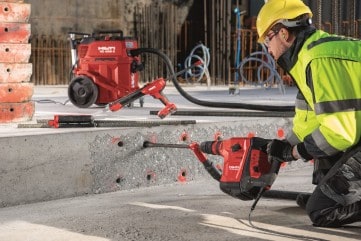
The SAFESET system we have to enhance the hammer drilling process is the Hollow Drill Bit (HDB). The hollow drill bit is a vacuum connected hammer drill bit which cleans the hole by sucking the dust out as it drills. A good HDB effectively produces the same hole as a standard hammer drill minus the dust and is included in the anchor's European Technical Assessment (ETA) document validating its use without impacting on performance. As the dust is removed while drilling, the use of a HDB removes any extra steps to clean the hole like blowing out or brushing the dust from the hole. This not only provides productivity gains by removing steps of the installation procedure but also provides health and safety benefits as the dust is effectively collected in a confined system, without having to be blown out and become airborne posing respiratory risks like silicosis.

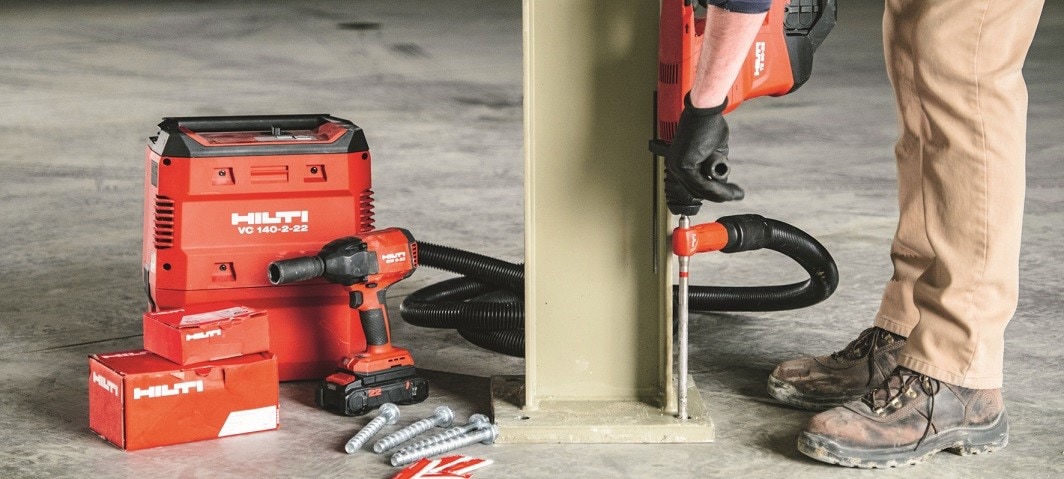
While diamond coring is often the preferred method for larger or deeper drill holes, it is a wet-drilling method which leaves the hole condition requiring more extensive cleaning than the dry hammer drilling. It also leaves a smooth hole surface which can affect the bond of chemical anchors or friction-based stress transfer in mechanical anchors.
The SAFESET addition to a diamond cored hole is to use a Roughening Tool (again, should be tested and approved by the product ETA). The use of a roughening tool in a cored hole presents two benefits. The aforementioned wet-drilling by a diamond coring drill leaves a slurry residue in the hole which required extensive hole cleaning adding water flushing as well as compressed air and brush cleaning. Using the roughening tool reduces this by removing certain steps.
The other benefit is regained performance. Post-installed anchors are typically tested in and rely on the roughened surface of the concrete which means in smooth core-drilled holes, there is potential for loss in performance. The Roughening tool, true to its name, roughens up the smooth surface of the hole and eliminates the potential for performance loss. Important to note, the roughening tool has to be part of the anchor product's ETA and is not a solution that is applicable to products that have not been tested and approved as such.
SAFESET for Chemical Anchors/Rebar
When looking at Chemical Anchors, the most common issue or area for error is the hole drilling and cleaning as mentioned above looking at the HDB and Roughening Tool. There are however other solutions that approach these issues on a more fundamental level.
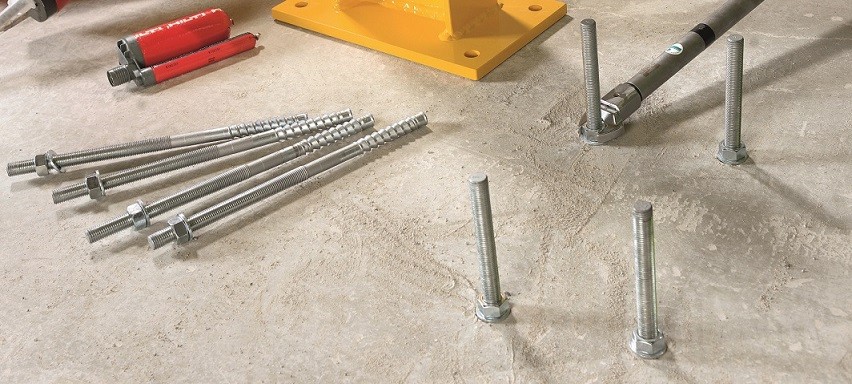
The Hilti HIT-Z anchor rod is a SAFESET System that is approved for use with Hilti's HY200-R V3 chemical anchor. Using this system of specialised anchor rod and chemical anchor, the hole cleaning requirement is eliminated entirely, while even increasing the performance of the anchor when compared to using a standard metric threaded rod.
SAFESET For Mechanical Anchors
Yes, mechanical anchors are less sensitive to hole cleanliness conditions but the hole drilling and cleaning methods explored above still apply depending on the product. Something more specific to mechanical anchors that is often not considered is the installation torque. Specifically for expansion or torque controlled mechanical anchors that utilise friction or undercutting mechanisms, the installation torque is a specific value rather than a given maximum or a range. This installation torque is very critical as under torqueing results in reduced pullout capacities and over torqueing can potentially damage the intricate design of the anchor expansion sleeve which transfers stresses to the concrete or can over-stress and even break or split the concrete itself. The installation torque differs for different products as well as different sizes and to achieve the exact torque, a calibrated torque wrench must be used (and kept in calibration).
Our SAFESET Solutions for the installation torque in mechanical anchors aim to eliminate the need for a calibrated torque wrench and for certain anchors, we can even remove the step of having to hammer in the anchor into the drill hole.
The first solution is for our HST3 and HSL4 expansion anchors. This is the Adaptive Torque Module which can be dialed in to the correct anchor type and size and set the attached Impact Wrench to apply only the exact torque required. Depending on the installation quality and the ability for the correct torque to be applied, it will either flash a green, yellow or red light and it even saves the installation data which can be exported and kept as part of a QA report.
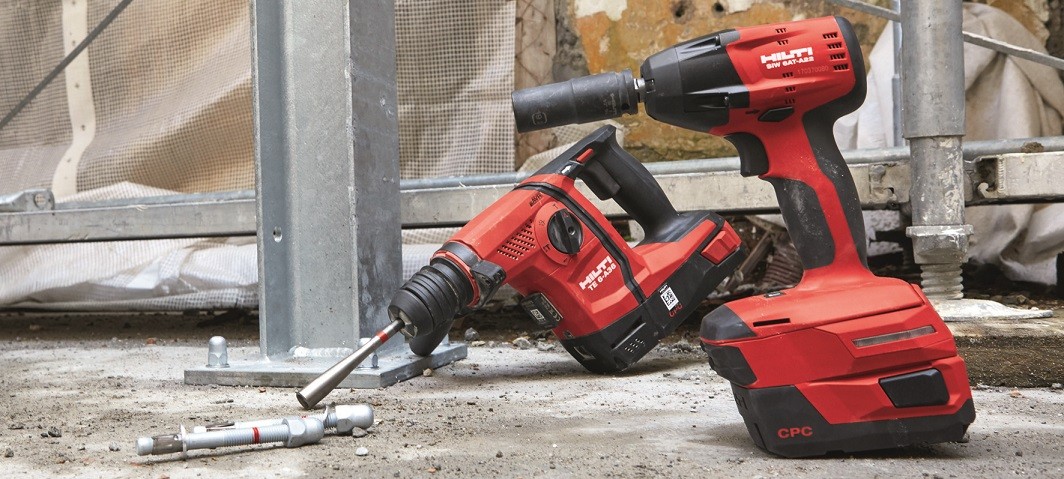
The HSL4 also has the HSL4-B variant which has a deliberately designed red-cap which can be torqued without a calibrated torque wrench (any large spanner or manual wrench will do) as the cap will shear off when the correct installation torque is achieved.
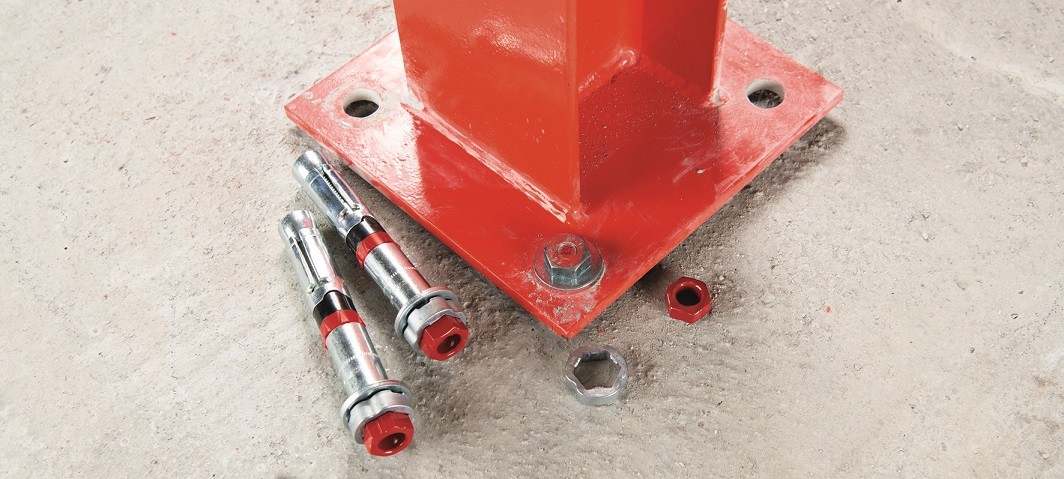
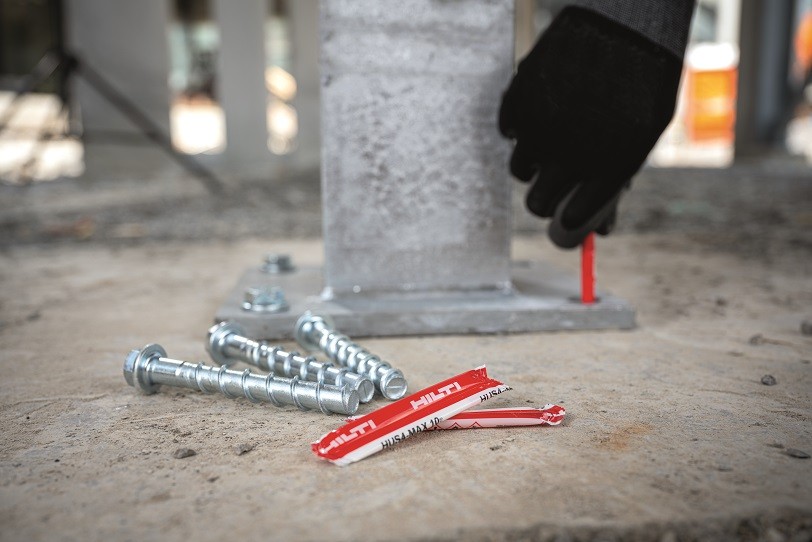
Both solutions remove the need for accurate installation torque and removes room for error, but what about a simple screw anchor where there is no need for installation torque entirely? Our HUS4 screw anchor not only has exact check gauge for checking the approved re-usability but we also have the SAFESET System in the HUS4 MAX where we introduce an adhesive capsule to increase performance while gaining flexibility such as re-using the same hole and reliability like water-tightness.
What can I do? How can Hilti Help?
As the designer working with post-installed anchors or rebar connections, there is a need to acknowledge that site limitations and time pressures often can increase room for error, particularly with complex and sensitive procedures that can affect the performance of these anchors.
There are three main lines of defence you can work with your Hilti Engineer to eliminate some of the uncertainties and decrease risks of compromised performance due to installation error:
- Adding SAFESET Systems or highlighting installation methodologies in the design specification
- Requesting formal Installer Training (cited in AS5216 as being either a certified AEFAC formal training course or Supplier Training specific to the designed connection and relevant products)
- Requesting or specifying Onsite Anchor Testing to verify the installation quality
You can partner with your dedicated Hilti engineer to review your specification details and how you can add SAFESET systems, organise Installer Training sessions for your projects or proceed with requests for Onsite Anchor Testing.
If you would like to discuss any of the above or topics covered in the article, please contact your Hilti Engineer or post a comment below and a Hilti Engineer will reach out to discuss further.