
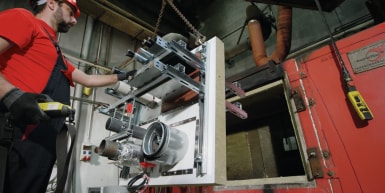
How the assessment path for firestop products can impact on the quality and safety of buildings
Passive Fire Protection
Life safety and asset protection are key requirements of building regulations across the globe.
To protect people and assets, an effective fire protection plan is required. The concept of fire protection includes active fire protection, which is detection and suppression with sprinklers, and passive fire protection, which helps contain the fire and smoke within a single room. Both active and passive fire protection are important and should be in place to deal effectively with fire. Containment is achieved by creating robust fire compartments that prevent the spread of fire and smoke and allow occupants to evacuate a building.
Compartmentation helps ensure that there are physical (or “passive”) barriers in place to restrict the movement of fire and smoke within a building. Passive barriers are the fire-resistant walls and floors that divide the building up.
It is common for these fire-rated walls and floors to accommodate multiple building services through openings (or penetrations) that may put the entire building at risk. Therefore, all openings in fire-rated walls and floors must be protected by seals with adequate fire resistance, called firestop.
Hilti has over 30 years of experience in providing internationally tested, approved and certified firestop systems for a wide range of mechanical, electrical, mixed penetration applications and construction joints. But how can you rest assured that the firestop solution you are choosing for your project is compliant?
What are third-party product certifications and why are they important?
The International standard ISO/IEC 17067 defines product certification as “an established conformity assessment activity that provides confidence to consumers, regulators, industry and other interested parties that products conform to specified requirements, including for example product performance, safety, interoperability and sustainability”.
These certifications provide all parties involved in the construction industry with the assurance that products have undergone rigorous testing and evaluation by independent, impartial entities that will not benefit from the results of the assessment (i.e. they are not the supplier or the user).
The product certification process is not limited to tests and their reports, but also extends to production surveillance, with continuous monitoring and audit, test review and evaluation, that can be accessed by all interested parties.
Third-party certification is not an assessment that reflects one specific point in time, but a live process that accompanies the end-to-end chain from raw material quality to documentation provided to builders, designers, inspectors, and project owners.
Ensuring Compliance and Regulatory Requirements
Fire safety regulations and codes play a critical role in safeguarding buildings and protecting lives. Although third-party product certifications for firestop are still not mandatory in Australia, recent well known building safety concerns have put light to the need for the inclusion of this requirement in the national regulations.
According to the latest National Construction Code (NCC 2022), evidences of suitability can be used to attest the fire performance of products, but not all are the same and or have the same level of risk.
For example, a product technical statement issued by the manufacturer or supplier will not provide the same level of evidence when compared to a test report by an accredited laboratory. However, the test report will not consider important information regarding the manufacturing process of that product.
Only independent certifications will be able to provide the full picture and traceability to guarantee that the product that was supplied is identical to the one that is being extensively and continuously tested.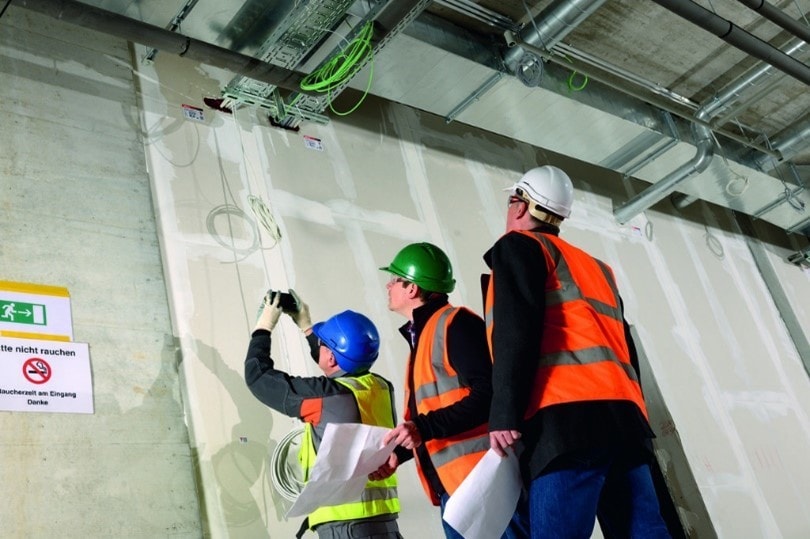
Essential for life safety and asset protection: correctly installed firestop products in fire compartments
Customer Confidence and Trust
Hilti Australia offers all firestop products comprehensively tested locally according to Australian Standards and is proceeding towards the product certification path in partnership with UL Australia.
Third-party certifications are a testament to Hilti's commitment to delivering high-quality firestop products. These certifications provide customers with an objective assessment of the performance, reliability, and compliance of Hilti's solutions. By relying on independent organizations to evaluate their products, Hilti cultivates trust and transparency in the industry.
Hilti is aware of customer needs in firestop applications and offers you the technical knowledge to help get it right, as well as the ability to advise you and offer engineered solutions and support during all phases of specification work.
Contact a firestop expert through our Technical Advice Services page.
Click here to learn how to access the latest versions of Hilti's UL-AU certificates.
ISO/IEC 17067, First edition 2013-08-01, Conformity assessment — Fundamentals of product certification and guidelines for product certification schemes
The information provided in this article is for general information purposes only. While we strive to ensure the accuracy and reliability of the information presented, it is not intended as legal, technical or professional advice.
Hilti makes no representations or warranties of any kind, express or implied, about the completeness, accuracy, reliability, or suitability, with respect to the article for any purpose.
