
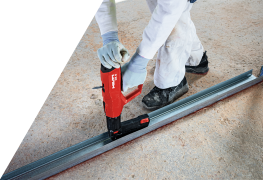
New powder actuated fasteners are a compliant solution that will bring productivity to partition wall fixings seismic applications
The application – Drywall Track Fixing
In a typical residential or commercial project in Australia there are different wall types, namely:
- Exterior/Perimeter walls;
- Interior walls – corridor and Inter-tenant;
- Interior walls – Intra-tenant.
In Figure 1, we have an example of an Exterior/perimeter wall (in red), inter-tenant walls (in yellow) and intra-tenant wall (in green).
Figure 1 - Example of Wall Types.
Drywalls are a common solution for interior walls. Inter-tenant and corridor walls, when compared to intra-tenant walls, usually have more stringent requirements, namely around soundproofing requirements, fire resistance and structural design (load requirements).
When it comes to installing drywall track fasteners, mainly the base and the top steel track are considered for design. Typically, the top track should allow for the deflection of the ceiling concrete slab without crushing the plasterboards, so it is common to have a distance between the plasterboard and the concrete ceiling (commonly up to 20 mm, – see Figure 2 on the right). This means that, when we need to design the fixing of a top track, a lever-arm for the shear forces acting on the track may be considered, causing a tensile force on the fastening. 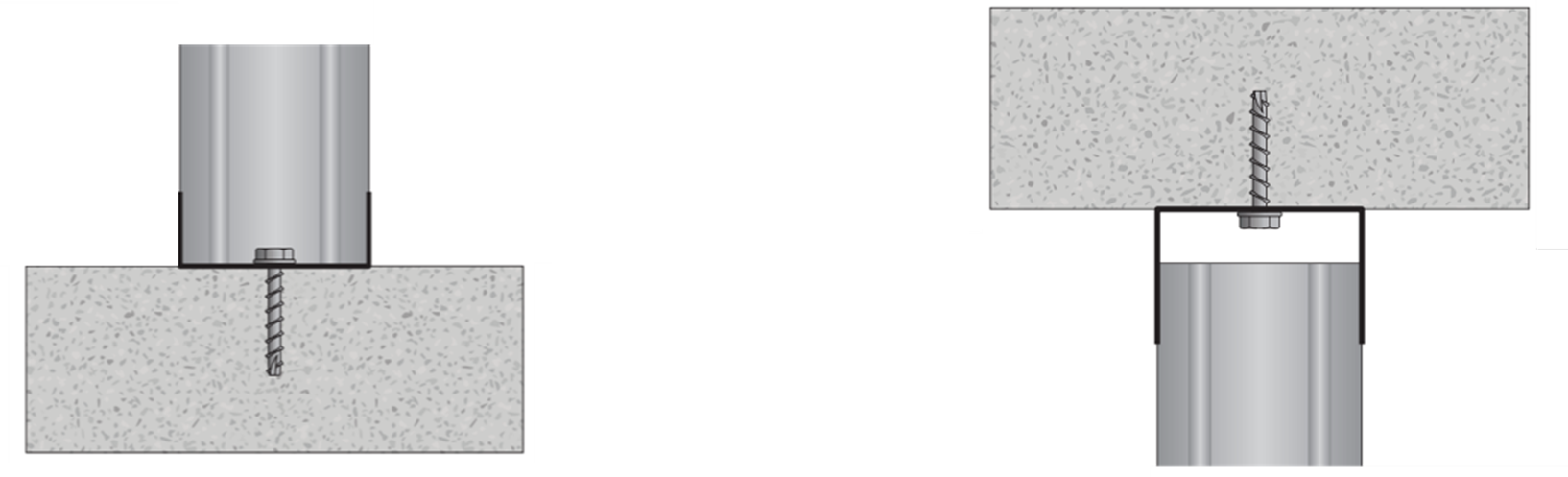
Figure 2 – Drywall track fastening with screw anchors: base track (left) and deflection head (right).
In intra-tenant walls, often not considered safety critical, the base and top track may be fixed using Power Actuated Fasteners (PAF), if accepted on the project.
However, inter-tenant walls are often considered to be safety-critical, requiring more stringent design (namely seismic, wind and fire design), the tracks are currently often tacked with PAF (to prevent the track from moving during installation), while screw anchors are installed to transfer any service loads, as seen in Figure 2. This way of fixing the track in inter-tenant walls, leads to some challenges for contractors, namely:
- Lower productivity, since anchors require more time to install compared to PAF.
- Potential over-engineering, since the load capacity of the anchors can often significantly exceed actual design demands.
- Exposure to concrete dust particles, since anchors require drilling, as it may not be possible to ensure 100% absence of silica dust exposure even using vacuum cleaners while drilling.
Seismic, Wind and Fire Design
In the early 2010’s, construction projects in Australia started to adopt more stringent requirements related to seismic actions, following the provisions of the Australian Standard AS 1170.4-2007 [2]. This code was recently updated [3] - section 8 is relevant for non-structural components and their fastenings.
In 2018, the first issue of the Australian Standard for the qualification and design of post-installed fastenings in concrete AS 5216 [4], was published for safety critical applications and adopting European Technical Assessments (ETAs) [5] to demonstrate suitability. Appendix F was added to AS 5216 in 2021 [6], relating to the design of fastenings under seismic actions.
For safety critical partition walls that need to withstand earthquakes for example, the use of seismically ETA approved anchors is considered the only code compliant solution to fix tracks, requiring extra steps when installing these components and therefore impacting construction productivity.
In addition to seismic requirements, safety critical internal walls might also be subjected to wind action which must be calculated in accordance with AS/NZS 1170.2 [7].
For seismic and wind actions, the relevant codes include maps to clearly highlight the most impacted areas – see Figure 3. For example, South Australia has ones of the highest earthquake hazard factors, while the Northern half of Australia is mostly affected by higher wind actions.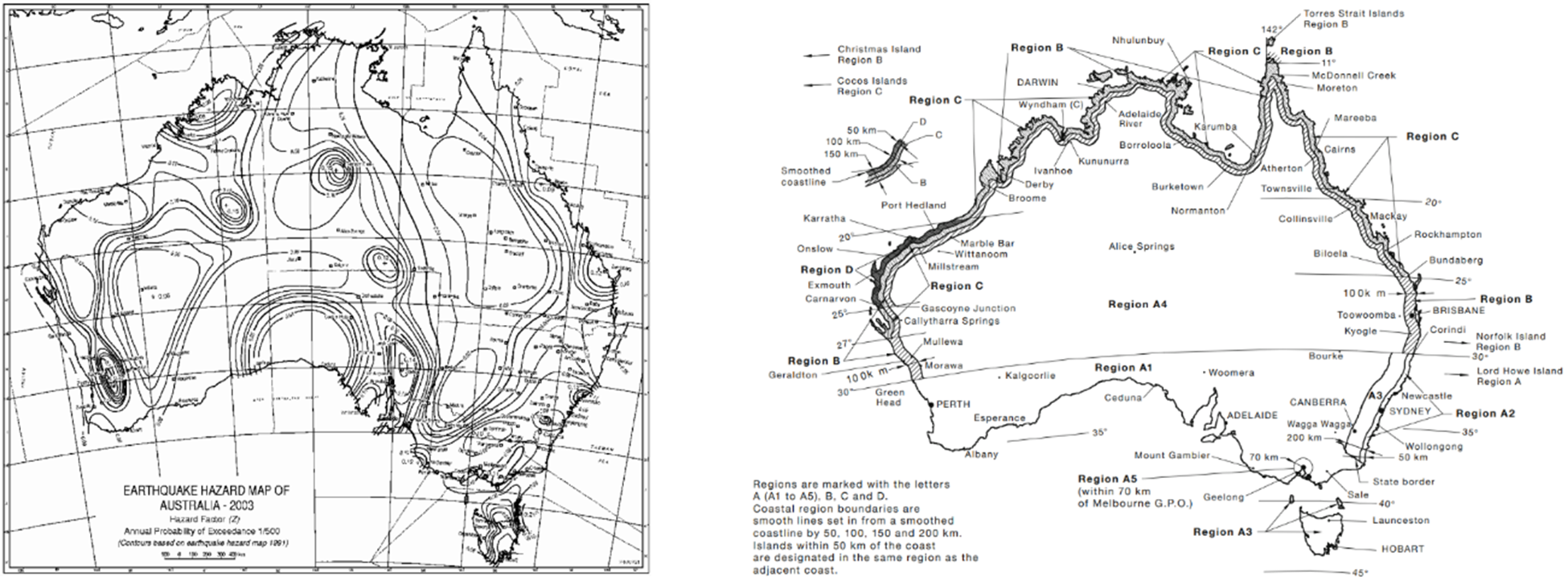
Figure 3 - Earthquake hazard map according to AS 1170.4 (left) and wind regions map according to AS 1170.2 (right).
Besides the location, the type and height of a building (defined by the importance level), as well as the height of a partition determine seismic and wind design actions.
For fire rated partition walls (often considered safety-critical), the National Construction Code (NCC 2022) [8], requires a prototype to be evaluated to determine the fire resistance level (FRL) of the full system, which includes the fixings used to support the tracks [8].
The X-X Nail
To tackle the increasing requirements in drywall fixing previously mentioned, Hilti Australia launched the X-X nail. The X-X nail is the first Power Actuated Fastener tested and approved for use in seismic conditions in concrete and was awarded ETA-23/0911 [9].
The X-X nail features a helix tip design – see Figure 4 – for best penetration and performance in concrete, and fixing is up to four times faster than the current method of fixing safety-critical internal drywall partitions (PAF plus screw anchors). 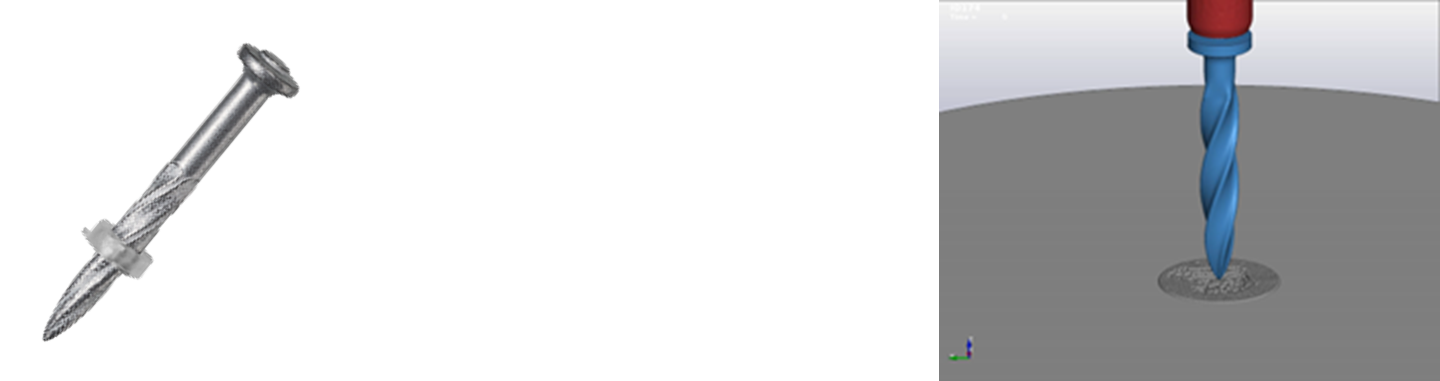 Figure 4 - The X-X nail: picture (left) and schematic representation (right).
Besides the ability to do more projects using the X-X fastener in a given time, the speed of installation of the X-X also can help to lower total cost of installation (considering both labour and material cost), which we estimate to be a reduction of around 14% (considering an average 2:1 ratio of nails compared to anchors). An overview of our analysis can be seen in Figure 5. 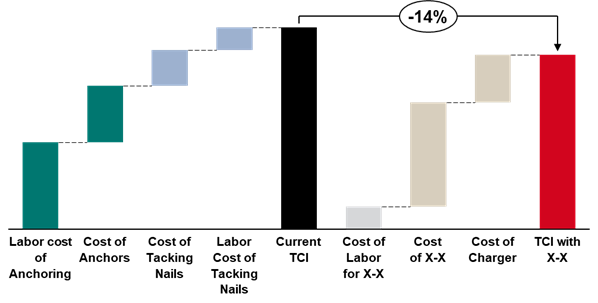
Figure 5 - Overview of a total cost of installation (TCI) comparison between anchoring and nailing with the X-X nail.
Fixing a drywall track with the X-X nail does not require drilling, which can help to significantly reduce worker exposure to hazardous silica dust and fatigue from working overhead. In addition, the X-X nail has a marked head with an “X” symbol that allows for easy inspection after application – refer to Figure 6.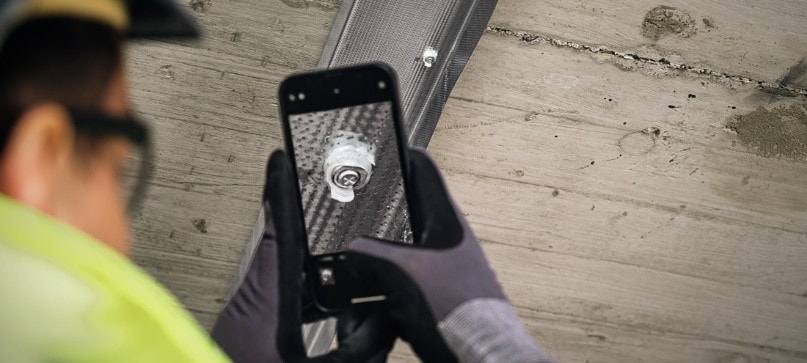
Figure 6 - Marked head of the X-X nail that allows for easy inspection.
The Hilti X-X fastener is recommended to be used in the following application conditions:
- Base and Head track attachments for interior drywall partitions;
- Fire rated walls as per AS 1530.4 [10];
- C1 Seismic regions, according to AS 5216 [4], with a crack width of ≤ 0.5 mm;
- Wind Zones A and B, in accordance with AS 1170.2 [11];
- Importance level 2 and 3 buildings, in accordance with AS 1170.0 [12].
It should be noted that an engineering design is typically required to determine the suitability and the required fastener spacing of the X-X nail for a given project. Applications beyond the referred scope can be covered by Hilti concrete anchors.
Code Compliance
The Hilti X-X nails are fully compliant with the National Construction Code (NCC: 2022), with evidence of suitability for static, seismic, wind and fire in accordance with section A5G3 of the NCC [8].
In addition to the previously mentioned ETA-23/0911 [9] (containing installation parameters, static, seismic and fire design data) the X-X documentation package also includes a Warrington Fire Regulatory Information Report and a third-party product certification report by UL-AU.
The documentation package can be accessed on the product page at Hilti Online >> here
The information contained in this article is provided for general informational purposes only. While every effort has been made to ensure the accuracy and completeness of the information, Hilti (Aust.) Pty Ltd assumes no responsibility for errors or omissions in the content of this article.
References:
[1] SINIAT, “Blueprint Lightweight Construction Manual,” Version 3, March 2022. Available: siniat.com.au. [Accessed: July 16, 2024].
[2] Australian Standards, “AS 1170.4-2007: Structural Design Actions – Earthquake actions in Australia,” 2007.
[3] Australian Standards, “AS 1170.4-2024: Structural Design Actions – Earthquake actions in Australia,” 2024.
[4] Australian Standards, “AS 5216-2018: Design of post-installed and cast-in fastenings in concrete,” 2018.
[5] EOTA, "What is an ETA?," Retrieved from EOTA Website [Accessed: July 8, 2024].
[6] Australian Standards, “AS 5216-2021: Design of post-installed and cast-in fastenings in concrete,” 2021.
[7] Australian Standards / New Zealand Standards, “AS/NZS 1170.2:2021: Structural Design Actions – Wind actions,” 2021.
[8] Australian Building Codes Board, “National Construction Code (NCC) 2022,” 2022.
[9] CSTB, “ETA-23/0911: European Technical Assessment for power-actuated fasteners in concrete for redundant non-structural applications,” 2024.
[10] Australian Standards, “AS 1530.4-2014: Methods for fire tests on building materials, components and structures – Fire-resistance test of elements of construction,” 2014.
[11] Australian Standards, “AS 1170.2-2021: Structural Design Actions – Wind actions,” 2021.
[12] Australian Standards, “AS 1170.0-2002: Structural Design Actions – General Principles,” 2002.
